
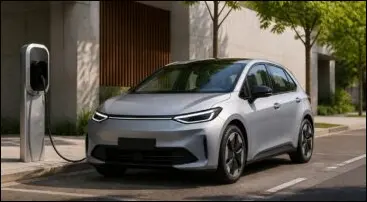

Choosing the Perfect Electric City Car in 2026: Tailor It to Your Lifestyle with the Volkswagen ID. Polo
Selecting an electric city car for 2026 starts with your daily routine rather than just specs on paper. The Volkswagen ID. Polo shines here, designed for city streets and suburban runs, offering up to 453 km WLTP range depending on trim and options, plus a practical 435-liter trunk. Whether you’re a solo city dweller, starting a family, or juggling remote work with commutes, factors like charging access, interior space, budget, and versatility make all the difference.
Match Your Driving Profile to the Ideal Electric City Car
Your lifestyle dictates the best electric city car. City-only drivers prioritize easy parking and quick top-ups, while families need room for strollers and groceries. Commuters blending home office days with suburb trips want balanced range and comfort. In 2026, focus on real-world charging options, usable space, sufficient range for your routes, and everyday ease.
The Volkswagen ID. Polo fits as a versatile small EV, with three power levels, two battery sizes, up to 453 km WLTP range, and that generous trunk. It’s built for more than tight urban grids—think mixed daily drives. Its MEB+ platform, intuitive controls with physical buttons, single-pedal driving, and an 8-year/160,000 km battery warranty (maintaining 70% capacity) add reliability.
Where the Volkswagen ID. Polo Stands Among Small EVs
Small EVs split into ultra-compact urban tools and versatile daily drivers. The former excel in dense traffic but lack space; the latter offer roomier cabins, bigger boots, and better range for varied trips. At 4,053 mm long with a 2,600 mm wheelbase, the ID. Polo leans versatile, prioritizing practical family or commuter use over pure city nimbleness.
Top Pick for Solo Urban Drivers
City singles value maneuverability, low running costs, and public charging compatibility over max range. Short trips mean a smaller battery works fine.
Opt for the ID. Polo’s 37 kWh entry versions: 116 hp for 323 km WLTP or 135 hp for 331 km WLTP, with 90 kW DC fast charging. Actionable tip: Map public stations via apps like PlugShare near home and work—aim for 30 kW+ for 30-minute top-ups during coffee breaks.
Best for: Short hops, tight parking, minimal cargo.
Pro: Solid daily range.
Watch: Confirm local charger availability and peak-hour access.
Example: A 20 km daily commute uses ~15% battery; recharge weekly at a nearby supermarket.
Best Setup for Young Families
Families demand rear space for car seats, a boot for school runs and weekends, and smooth highway merges.
The ID. Polo delivers five seats, 435 liters boot (expanding to 1,243 liters), and improved cabin room over traditional Polos. Go for 52 kWh models: up to 453 km WLTP, 105 kW DC charging.
Practical advice: Test-fit your stroller and child seat during a demo drive. Use fold-flat seats for bulky items.
Example: School drop-off (5 km), groceries (10 km), weekend outings (50 km)—52 kWh covers it with recharge buffer.
Ideal Choice for Hybrid Telecommuters
Balancing office days, suburb drives, and errands? You need efficiency without constant plugging in.
The 52 kWh ID. Polo balances power, up to 453 km range, and 105 kW charging for flexible routines.
Tip: Track weekly mileage via an app; if over 200 km mixed, prioritize larger battery to skip mid-week charges.
Example: 3x 40 km commutes + local errands = ~250 km/week; fast-charge en route to work.
Mini-City EV vs. Versatile City Car: Comparison Guide
| Criterion | Mini-City EV | Versatile City EV | ID. Polo Positioning |
|———–|————–|——————-|———————-|
| Main Use | Dense urban, short trips | Urban + suburbs, mixed | Urban & peri-urban |
| Space | Basic for 1-2 | Room for 4-5 | Five seats |
| Trunk | Small | Practical daily | 435 liters |
| Range Needed | Low-moderate | Flexible broader | Up to 453 km WLTP |
| Fast Charge | Optional | Key for variety | 90-105 kW |
Key Checks Before Purchase
Verify charging infrastructure: Home wallbox? Nearby public/fast options? Use tools like Chargemap.
Real range: WLTP is comparative; expect 70-80% in mixed conditions. Budget: Entry ID. Polo Trend 37 kWh from ~€17,850 (Aug 2026 with €6,145 incentives)—check current deals.
Steps: 1. Log a week’s drives. 2. Audit chargers. 3. Test drive. 4. Compare buy vs. LLD lease (Volkswagen favors LLD here).
FAQ: Electric City Cars by Usage
Mini vs. Versatile for City Driving?
Mini for solo short urban; versatile like ID. Polo (five seats, 435L boot, 453 km max) for passengers/cargo/mixed trips.
Urban + Suburbs Recommendation?
Balanced like 52 kWh ID. Polo: 105 kW charge, ample range.
Real-World Range in Mixed Use?
Varies by conditions; ID. Polo: 323-453 km WLTP. Plan for your routes.
Apartment Charging Without Private Spot?
Scout nearby: Apps for CCS plugs, 50 kW+. ID. Polo handles 90-105 kW DC well.
Charger Compatibility Check?
Match CCS standard, power limits via manufacturer apps.
Buy or Lease?
Buy for long-term; LLD for flexibility—compare totals with your km/year.
Questions for ID. Polo Owners?
Ask: Charge frequency? Public ease? Cabin comfort? Boot practicality? One-pedal drive feel?