

The Chicken-and-Egg Challenge for Electric Vehicles in Canada’s Northwest Territories
Adopting electric vehicles (EVs) in remote areas like the Northwest Territories (NWT) faces a classic dilemma: should communities build charging stations before demand grows, or does low adoption stem from insufficient infrastructure? In Yellowknife, local leaders are tackling this head-on to pave the way for greener transportation.
Yellowknife’s Commitment to EV Growth
The City of Yellowknife is actively integrating EV chargers into new public parking developments. As part of its recently released Climate Action Plan, the municipality aims to slash road transport emissions, which make up roughly 20% of the city’s total greenhouse gases. A public EV symposium scheduled for September 12 will bring residents together to discuss strategies and opportunities, fostering community buy-in for sustainable mobility.
Signs of Increasing Demand
Residents report that current charging spots are often occupied, with long waits becoming common. This feedback is encouraging—it demonstrates real usage and highlights the urgent need for expansion. “People are using them, which is great, but we clearly need more,” notes a city planning official.
A Local Family’s Transition to Hybrids
Take Jeremy Armitage, a Yellowknife resident whose gasoline car failed during the 2023 wildfire evacuation. He switched to a hybrid vehicle and hasn’t looked back. “No major downsides from our experience,” he shares. For family road trips to Alberta, hybrids ease range anxiety compared to full EVs, though he advocates for bolstered infrastructure to enable zero-emission long hauls confidently.
Milestone: EV Charging Corridor to Alberta
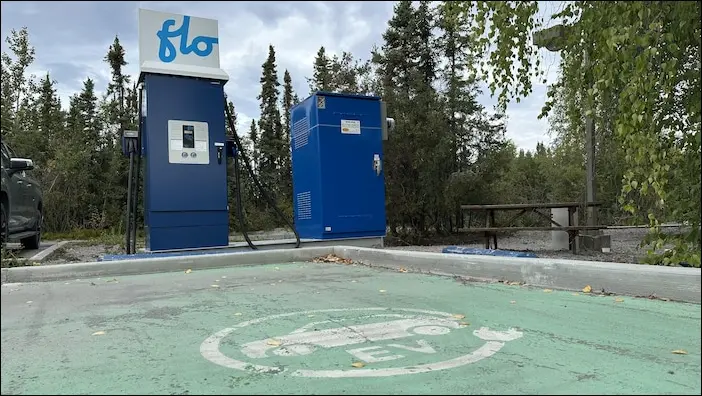
Celebrating World EV Day on September 9, the NWT government marked the completion of a vital charging network linking Yellowknife to Alberta last year. Stations now dot key spots along major highways: Naka Power Utilities manages sites in Yellowknife, Fort Providence, and Enterprise, while the Northwest Territories Power Corporation oversees those in Behchokǫ̀, Hay River, and Fort Smith.
Usage data reflects early traction:
- Fort Providence: 34 sessions
- Enterprise: 34 sessions
- Prince of Wales Northern Heritage Centre: 41 sessions
- Naka Power offices in Yellowknife: 22 sessions
The Power Corporation’s three stations recorded 194 sessions and delivered nearly 6,182 kWh from January to mid-August this year.
Utilities See Promise Amid Early Adoption
“We’re thrilled by the territory-wide enthusiasm for EVs—it’s beyond expectations,” says Jason Yorke, operations director at Naka Power Utilities. While revenue isn’t booming yet, these stations support the shift to clean energy. Without territorial funding, large-scale rollouts wouldn’t be feasible, he adds.
Lessons from Long-Haul EV Travelers
Former Yellowknife resident Shaun Robertson recently drove an EV from Vancouver to the city, then up the Dempster Highway to the Arctic Ocean. He praises the Yukon’s superior network: “As someone from the NWT, it was disappointing to see our neighbor ahead.” Wildfires blocked roads during his trip, underscoring the need for more midway chargers—not just for winter cold but for detours and delays.
Practical Tip for Northern EV Trips: Equip your vehicle with a spare battery or portable charger, and monitor apps like PlugShare or ABRP for real-time station availability and route planning.
Hurdles: Grid Constraints and Extreme Conditions
The NWT’s limited power grid poses challenges. At Fort Providence, operators used a dedicated battery to power a charger, avoiding strain on the main network during peaks. Extreme cold reduces battery efficiency, and wildfires add unpredictability.
Path Forward: Expansion on the Horizon
The government plans one additional station at Buffalo Junction and is pursuing funding for more. Actionable Advice for Advocates: Attend local events like Yellowknife’s symposium, support policy petitions, and consider home charger incentives to build demand from the ground up.
By addressing infrastructure proactively, the NWT can accelerate EV adoption, cut emissions, and embrace a cleaner future despite its unique northern challenges.