
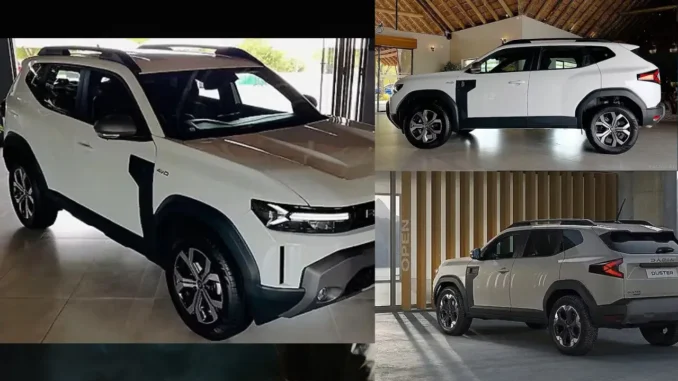
The Renault Duster’s return to the Indian market represents more than just another product launch for the French automaker. This is a make-or-break moment for Renault’s fortunes in one of the world’s most competitive automotive markets. The question isn’t whether the Duster is a good SUV, it’s whether it can fight its way back into relevance in a segment that has evolved dramatically since the original model’s exit.
The Weight of Legacy
The first-generation Duster built a cult following in India for good reason. It offered genuine SUV capabilities, diesel grunt, and value that was hard to ignore. But Renault let that goodwill evaporate through years of neglect and minimal updates. By the time the model was quietly phased out, buyers had moved on to more sophisticated options from Hyundai, Kia, and even newer entrants like MG.
Now the new Duster arrives in a segment dominated by the Hyundai Creta, which has essentially rewritten the rulebook for what mid-size SUV buyers expect. The Creta isn’t just popular, it’s become the benchmark that everything else gets measured against. Renault isn’t just competing with Hyundai here, they’re competing with buyer expectations that have been shaped by years of feature-rich, tech-heavy products.
The Pricing Conundrum
Renault’s task is complicated by a pricing reality that leaves little room for error. The brand doesn’t have the premium cache of Hyundai or Kia in India anymore. To make the Duster work, they’ll need to undercut the competition without looking cheap, which is a difficult balance to strike. The rumored sub-11 lakh starting price makes sense strategically, positioning the Duster at the upper end of sub-compact territory while offering more space and presence.
But pricing alone won’t cut it. The mid-size SUV segment has become intensely feature-driven, with buyers expecting panoramic sunroofs, connected tech, multiple screens, and advanced safety systems as standard fare. Renault will need to match these expectations across multiple variants, not just the top-spec model, if they want to generate the kind of volume needed to justify this comeback.
The Diesel Dilemma
Renault’s decision to skip diesel entirely is both pragmatic and risky. Yes, diesel’s share in this segment has declined, and yes, the regulatory environment makes diesel expensive to develop. But there’s still a substantial buyer base that prefers diesel for highway use and long-distance driving. By going petrol and hybrid only, Renault is essentially conceding a portion of the market to rivals who still offer diesel options.
The hybrid route makes sense as differentiation, especially if Renault can price it competitively. But hybrids need to demonstrate real-world fuel efficiency advantages to justify any premium over standard petrol variants. If the hybrid just brings complexity without meaningful savings at the pump, buyers will simply opt for turbo petrol from competitors instead.
Distribution and Service Reality
Here’s what Renault doesn’t talk about much but needs to address: their dealer network and service reputation in India have taken a beating over the years. The brand’s market share has shrunk, dealerships have closed, and buyer confidence in after-sales support has eroded. Launching a product is one thing, but ensuring buyers can actually service it conveniently across the country is another challenge entirely.
Hyundai and Maruti have built their dominance partly on the back of extensive service networks and strong resale values. Renault will need to demonstrate a serious commitment to rebuilding this infrastructure, or risk the Duster becoming another model that looks good on paper but struggles in the real world.
What Success Actually Looks Like
For the Duster to succeed, Renault needs to be realistic about what success means in the current market. This isn’t 2012, the Duster won’t redefine the segment or become an overnight sensation. Success here means clawing back 3-5% market share in the mid-size SUV segment over the next two years, rebuilding dealer confidence, and creating a foundation for the three-row SUV that’s supposedly coming in late 2026.
The product itself appears competent based on the global version. But competent isn’t enough anymore. The Duster needs to be compelling on features, aggressive on pricing, and backed by a distribution and service network that can actually support it. Renault has burned through a lot of goodwill in the Indian market, the Duster’s job is to start earning some of it back.
This is the product that determines whether Renault remains relevant in India or becomes a marginal player with a handful of niche models. The stakes couldn’t be higher, and the competition has never been tougher. The new Duster isn’t just fighting for sales, it’s fighting for Renault’s future in the world’s third-largest automotive market.

Leave a Reply