
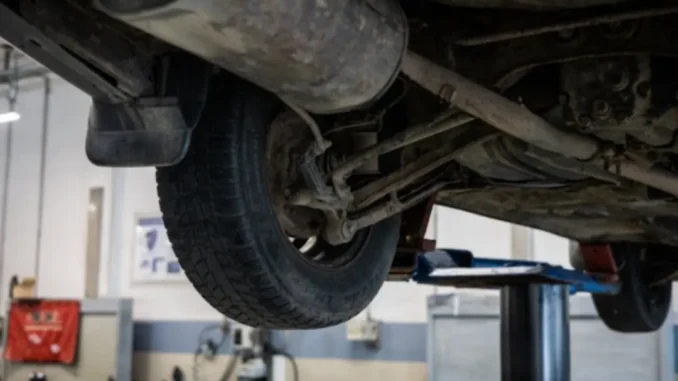
Do you hear a squeak when you turn the wheel? That small sound can point to many systems. Some causes are harmless. Others affect safety.
How to think about the problem
What changes when you turn? Load shifts, joints move, and fluids flow. Any one of those can make a noise.
Compare it to a door hinge. A dry hinge squeaks under stress, just like worn car parts.
Power steering problems
What it sounds and feels like
High‑pitched whine or squeal as you turn. Usually worse at low speed or when parking. Steering can feel heavy or jerky.
Common causes
Low fluid from a leak. Failing power steering pump. Air or dirty fluid reducing lubrication.
What to check
Look at the power steering fluid level and color. Top up with the correct fluid only. If level is fine, have pump and belts inspected.
Suspension and steering linkage (very common)
What it sounds and feels like
Sharp squeak or creak when the body shifts. Noise often happens over bumps or when turning slowly. You may also feel looseness or hear clunks.
Parts that usually cause it
Ball joints, control arm bushings, sway bar links. Tie‑rod ends and other steering joints. They behave like old rubber boots or dry hinges.
What to do
Have a mechanic check for play and torn rubber. Many worn bushings need replacement, not just grease. Don’t ignore loose steering parts.
Struts and shocks
Signs to notice
Squeak plus a bouncy or harsh ride. Push‑in braking and lots of body roll. Noise often appears when turning and hitting bumps.
Why they squeak
Mounts and bearings can dry or fail. The suspension pivots more in a turn, exposing wear. Think of a tired shock as a tired springy chair.
Action steps
Test ride on rough pavement and listen. Have struts and top mounts inspected and replaced if needed.
Tires and road surface
Typical clues
Squeal only while cornering on smooth surfaces. No steering vibration and braking feels normal. Happens more in parking garages or on concrete.
Causes
Low tire pressure or uneven wear. Tire compound and tread pattern reacting to pavement. Small stones stuck in the tread.
Quick checks
Check tire pressures and correct them. Inspect tread for wear and debris. If it only happens on certain surfaces, it may be normal tire noise.
Wheel bearings
How it behaves
Squeak that can progress to grinding or growling. Often louder when turning one way. May get louder with speed.
Why turning makes it worse
Turning loads one wheel more than the others. A failing bearing loses lubrication and roughens. It’s like a bad wheel bearing humming louder under stress.
What to do
Have a shop road‑test and inspect bearings. Replace noisy or loose bearings promptly. This is a safety issue.
Brakes
When brakes are the cause
Squeak while turning slowly or when lightly braking. Noise may come and go with pedal pressure. Often heard during tight, slow turns.
Common culprits
Worn pads or wear indicators scraping rotors. Debris between pad and rotor. Surface rust on rotors after parking.
Fixes to try
Inspect pads and rotors for thickness and glazing. Clean pads, hardware, and rotors if needed. Replace worn parts when necessary.
Steering column and interior trim
The quieter, inside squeak
Soft plastic or rubber noise inside the cabin. No change in steering feel or handling. Often shows in new cars or in hot weather.
Why it happens
Friction between steering housing and dash trim. Trim can shift with wheel movement. Think of it like shoes rubbing while you walk.
How to resolve
Try adjusting the steering wheel position. Have trim or column serviced if needed. New cars may be covered by warranty.
Environmental and minor causes
Temporary, harmless sounds
Moisture, dust, or road grime can make short squeaks. Uneven ramps can create normal tire scrub noises. These often stop after a short drive.
Simple maintenance
Keep suspension and brakes clean. Remove stones from treads. Regular checks reduce odd noises.
How to narrow it down yourself
Ask three quick questions
Does it happen at low or high speed? Does it happen only when braking? Is it front or rear sounding?
Simple tests to run
Turn the wheel at a stop and listen. Drive slowly and turn both ways to see if one side gets louder. Brake lightly while turning to check brake noise.
Where to focus based on answers
Only at stop or low speed → check power steering or column. With bumps or body roll → inspect suspension and bushings. Louder when turning one way or with speed → suspect wheel bearing. Only when braking → look at brakes.
When to see a mechanic right away
Is the steering heavy or unpredictable? Do you feel vibration or grinding? If yes, get it checked immediately. Steering and wheel bearing problems can be dangerous.
Cost and repair notes
Want a simple example? Replacing a sway bar bushing is cheaper than a full strut. Wheel bearings and steering pumps cost more and affect safety. Get a quote before major repairs.
Final diagnostic checklist you can do now
Check fluid levels and belts under the hood. Inspect tires for pressure, stones, and wear. Listen while a helper turns the wheel at idle. Note when and where the squeak happens for the mechanic.
If you’re also experiencing a car vibration at high speed, it could be a related issue with your wheels or suspension.
Conclusion
A squeak while turning can be harmless or a safety issue. Start with simple checks: fluid, tires, and visible wear. Use the tests above to narrow the likely cause. See a mechanic if steering feels odd or noise gets worse. Tell me: front or rear, low or high speed, and whether braking matters. I’ll help you narrow the likely system.
Leave a Reply