
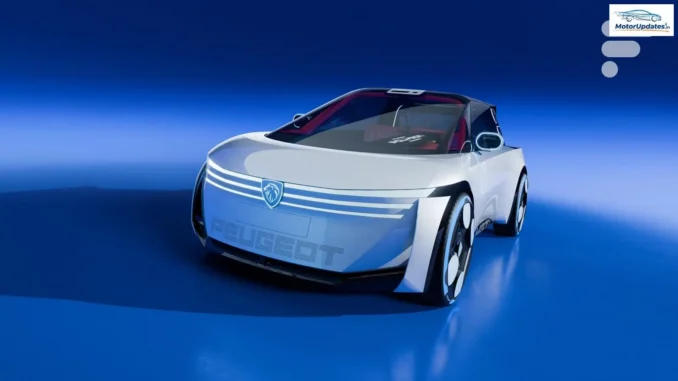
Curious about Peugeot’s future? The Polygon concept points the way. It shows design changes, new tech, and the Hypersquare wheel.
Design and Styling
Exterior: neo-retro hints
Could a small car shout heritage? The Polygon blends 1980s cues with modern lines. The rear feels raw, like a compact rally car reborn.
Geometric approach and proportions
Is the shape simpler than recent Peugeots? Yes. The body uses straight planes and clear angles. It stays below four meters long.
Lighting and wheels
Why look closer at the front? The horizontal micro-LED signature reimagines the three-claw motif. Goodyear contributed connected tires with colorful laser markings and 3D-printed hubcaps.
Interior and the Hypersquare
Hypersquare steering: a fresh concept
What is the Hypersquare? It is a rectangular steering wheel. It becomes possible thanks to steer-by-wire, an all-electronic steering system.
Steer-by-wire explained
How does steer-by-wire work? Signals replace mechanical linkages between wheel and road. Think of it like a joystick controlling direction. It allows variable steering ratio for city and highway driving.
Benefits and limits of the compact wheel
Why shrink the wheel? Less rotation is needed. The Polygon limits total steering rotation to 340 degrees versus 1,080 degrees for classic systems. That keeps both hands on the wheel more often.
Dashboard and space rethinking
Can a new wheel free up room? Yes. The compact shape creates extra cabin space. The dash replaces many screens with a head-up projection spanning 24 cm by 74 cm.
Seats and materials
Are the seats different? They use molded foam over 3D-printed shells. The plastics include recycled content. It feels like a mix of craft and industrial design.
Technology and Sustainability
Connectivity and smart tires
What role do tires play today? Connected tires send data for safety and efficiency. Goodyear’s example shows how tires can become part of vehicle electronics.
Manufacturing innovations
Can 3D printing help sustainability? It reduces waste and allows complex shapes. The Polygon uses this for decorative and structural parts.
Powertrain and platform
STLA Small and future powertrains
Which platform will small Peugeots use? The STLA Small platform was announced for pure electric models. Rumors suggest it may now support multiple energy types.
Timing for production models
When will these ideas reach roads? Peugeot says innovations will arrive from 2027. Earlier plans pointed to 2026, so timelines slipped. The new 208 electric is likely the first to get these features.
Market strategy and implications
Why the delay matters
Does a delay affect buyers? Yes, it shifts planning for fleets and consumers. It could also mean the platform was revised for broader use.
Two possible paths forward
What choices does Stellantis have? Either the STLA Small became multi-energy, or current small models get deep updates. Both paths extend the lifespan of existing designs.
Conclusion
Summary and key takeaways The Peugeot Polygon is a concept that previews future electric Peugeots. It highlights the Hypersquare wheel and steer-by-wire tech. It mixes retro cues with modern materials and smart tires. Expect these features in cars from 2027, likely starting with the 208. Keep an eye on platform choices, as they will shape the next generation of small Peugeots.
Leave a Reply