
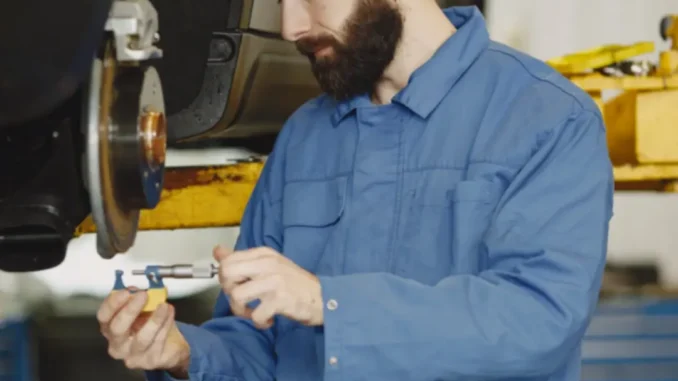
Steering wheel shake when braking signals problems with brakes, tires, or suspension that need attention. Do not ignore it.
Most common causes
Each cause creates different feels and sounds that help diagnosis.
Warped or uneven brake rotors
Warped rotors are common. Heat and uneven wear make the rotor wobble slightly, causing brake pulsation felt in the wheel.
Uneven or worn brake pads
Uneven brake pads grab inconsistently. A sticking caliper or thin pads make the pads bite in spots, causing vibration.
Tire and wheel issues
Tires and wheels matter. Out-of-balance tires, bent rims, or uneven wear can set up vibrations that grow worse when braking. For smooth operation, it’s also important to know what the correct tyre pressure for your car should be.
Suspension and steering wear
Worn steering parts allow play. Ball joints, tie rods, or control-arm bushings with play let the wheel wander under braking, causing shake.
Wheel bearing or hub runout
Hub wobble is subtle but damaging. Excess hub runout makes the rotor run off-center and transmits pulsation to the steering wheel.
How to narrow it down
Noting when and how the shake appears narrows the likely causes and speeds repair.
When you feel it
If it appears only while braking from high speed, front rotors or brake components are prime suspects.
At what speeds and behaviors
Shaking above 40 mph points to rotor issues; shake at all speeds suggests tires or alignment problems.
Where you feel it
Steering wheel only suggests front-end brake or suspension issues, while pedal or body vibration suggests rear or driveline faults.
What a mechanic will usually check
A mechanic follows a checklist to pin down the cause and recommend safe repairs.
Brake system inspection
Technicians also check rotors for heat spots, warping, pad wear, and caliper function. This often reveals the issue.
Wheels, tires, and alignment
They look for balance, uneven tread, low pressure, and bent rims; alignment may be measured too.
Suspension and bearings
A pry bar and wheel lift help reveal worn ball joints, tie rods, bushings, and loose bearings. Any play affects braking feel.
What you should do next
Do not delay; braking vibrations can worsen and increase stopping distance, creating real danger. Schedule an inspection soon.
Immediate precautions
If you hear grinding, loud squeal, or the car pulls to one side, avoid high-speed driving and seek immediate help.
How to describe it to a mechanic
Tell the shop the speed range, whether vibration is in the wheel, pedal, or body, and any noise or pull. This saves diagnostic time.
Steering wheel shake is serious. Most causes are warped rotors, worn pads, tire imbalance, or worn suspension, and a mechanic should check them. Act now to stay safe.
Leave a Reply