
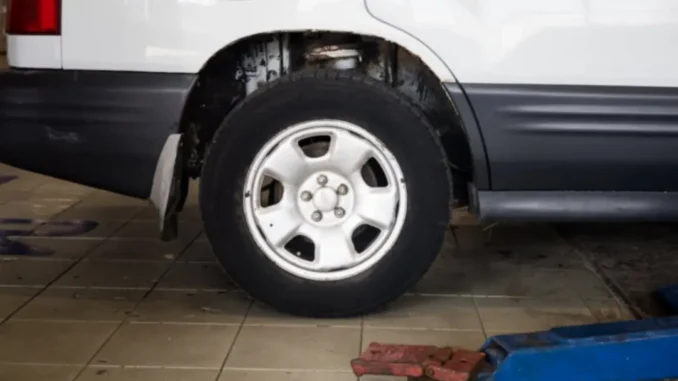
Want your car to track straight? Wheel alignment adjusts suspension and wheel angles so tires sit correctly relative to the road and car. This protects tires and handling.
What is wheel alignment?
Have you ever worn crooked shoes? Wheel alignment is similar. It makes sure each wheel points the right way for smooth movement.
Wheel alignment is a suspension adjustment, not bending the tire or wheel. Technicians change suspension linkages and joints to match factory specs. The result is wheels perpendicular to the road and parallel to each other when required.
Why does that matter? Proper alignment reduces tire wear, improves steering stability, and lowers rolling resistance. It also helps driver‑assist systems function as intended.
Key alignment angles
What makes an alignment precise? Three main angles control wheel position and handling. These angles are camber, caster, and toe.
Camber
Think of camber as a book tilting on a shelf. Camber is the inward or outward tilt of the wheel seen from the front. It affects corner grip and causes inner or outer tire edge wear when incorrect.
Caster
Curious how steering returns to center? Caster controls that. Caster is the forward or rearward tilt of the steering axis seen from the side. More caster improves straight-line stability and the self-centering feel of the steering.
Toe
Want to imagine toe? Picture two feet pointing slightly toward or away from each other. Toe is whether the front of each tire points in or out when viewed from above. Small toe errors cause feathered tread and rapid wear.
Other measurements
Ever heard of thrust angle or setback? These secondary values ensure the axle lines are square to the vehicle. They confirm the rear wheels track correctly behind the front wheels.
Two‑wheel vs four‑wheel alignment
Do you need both axles adjusted? It depends on your car. Vehicles with adjustable rear suspension or all-wheel drive usually need four‑wheel alignment.
Two‑wheel (front‑end) alignment adjusts only the front. It works on many older or simpler rear suspensions. Four‑wheel alignment adjusts all four wheels and corrects thrust and rear toe issues.
Choose four‑wheel alignment when you see rear tire wear, after suspension work, or when the vehicle pulls despite front alignment. It provides a more complete, factory‑spec setup.
Signs you need an alignment
Is your car pulling to one side? That is a common alignment symptom. A straight road test can reveal steering pull quickly.
Needle-like wear patterns tell a clear story. Uneven wear on tire edges often signals camber problems. Feathering or sawtooth tread usually points to toe issues.
Is the steering wheel off center? If the wheel isn’t straight when driving straight, an alignment check helps. Vibrations or wandering can also mean alignment or other wheel issues.
When to get an alignment check
Should you check alignment after hitting a pothole? Yes. Impacts can move suspension parts out of spec. Even small curbs may change toe or camber.
What about new tires or suspension work? Always check alignment after fitting new tires or replacing tie rods, control arms, or struts. This protects the new rubber and prevents rapid wear.
How often should you check? There is no strict interval, but a check every 12–24 months or with noticeable symptoms is sensible. Drive on rough roads more? Check more often.
How technicians perform an alignment
Want to know the process? Technicians use an alignment machine with sensors and a computer. They measure each wheel angle against factory specifications.
Adjustments are made by turning tie rods, control arm bolts, and cam bolts. The technician then re-measures to confirm the settings are within spec. It takes skill and correct equipment to get precise results.
Real‑world examples
Ever scraped a curb while parking? That small impact can tilt camber enough to wear inner tire edges. Hit a big pothole? It may bend a tie rod and create severe toe misalignment.
Installed lowering springs? Changing ride height often alters camber and toe. Custom lifted trucks usually need alignment after changes to stay road‑safe.
Why proper alignment matters
Want longer tire life? Correct alignment spreads wear evenly across the tread. That saves money and reduces blowout risk.
Concerned about safety? Proper alignment improves braking response and vehicle predictability in emergencies. It also eases steering effort and reduces driver fatigue.
Does fuel economy matter? Yes. Misaligned wheels create rolling drag. Aligning wheels helps the car roll smoothly and burn slightly less fuel. For more on efficiency, see our guide on What is the ideal speed for best mileage in car.
Protecting other systems
Did you know alignment affects driver‑assist tech? Lane‑keeping and adaptive cruise systems rely on accurate wheel positioning. Bad alignment can degrade their performance. Keep the alignment correct to maintain these systems’ accuracy.
Costs and DIY considerations
Can you align at home? Basic toe adjustments may be possible with patience and tools. Full alignment requires an alignment machine and experienced hands. Mistakes cost tires and safety, so professional service is often worth it.
What about costs? Prices vary with region and vehicle type. Expect higher cost for four‑wheel alignment or specialty vehicles. Consider the cost of premature tires when you compare prices.
Summary of when to act
See uneven wear, steering pull, or an off‑center wheel? Schedule a professional alignment check. After impacts, suspension work, or new tires, get alignment verified.
Routine checks every 1–2 years are practical for many drivers. Drive poorly maintained roads? Check sooner.
Conclusion
Wheel alignment keeps tires perpendicular to the road and parallel when needed. It improves tire life, handling, fuel economy, and safety. Watch for pulling, uneven wear, or steering‑center problems, and check alignment after impacts or suspension work. Regular alignment checks save money and keep your car stable on the road.
See also: How Often Should I Rotate Car Tyres
Leave a Reply