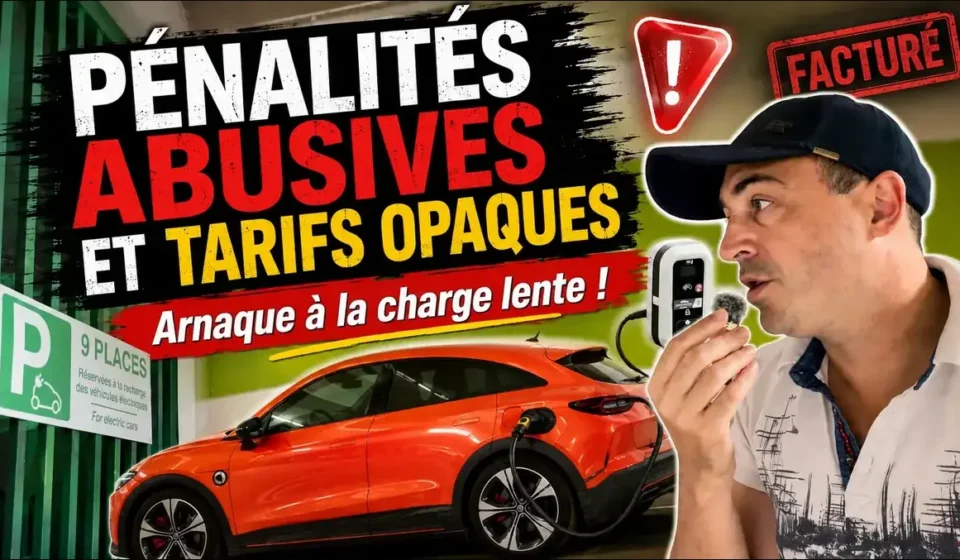
Exposed: Skyrocketing Penalties and Confusing Costs Turning Slow EV Charging into a Rip-Off

The Hidden Traps of Slow EV Charging: Excessive Fees and Unclear Pricing
While fast-charging networks have expanded rapidly across Europe, especially in France, slow-charging options remain underdeveloped and frustrating. Many operators rely on dynamic pricing that’s hard to decipher, leading to unexpectedly high bills for everyday users. This has turned what should be an affordable convenience into a potential financial pitfall.
Understanding Slow vs. Fast Charging
Electric vehicles (EVs) can recharge in two main ways. Fast charging uses direct current (DC) through CCS connectors, delivering power straight to the battery at high rates. This allows recovering up to 80% of the battery in 12-40 minutes but requires expensive infrastructure like high-power grid connections, transformers, and heavy cabling.
Slow charging, on the other hand, uses alternating current (AC) via Type 2 cables—the same power found in homes and streets. It operates at 7-22 kW (depending on single or three-phase, amps), making installations far cheaper. Public slow chargers are essentially beefed-up home versions with payment systems, safety features, and durability for shared use. Costs mainly involve site leasing or partnerships with parking operators.
Given these low setup expenses, slow chargers could proliferate easily in parking lots and urban areas. Yet, they’re scarce—often just a handful amid hundreds of spots—driving up demand and enabling questionable practices.
Decoding the Pricing Puzzle
The biggest headache? Tariffs rarely displayed on chargers because they fluctuate wildly. Prices per kWh depend on subscriptions, roaming apps, time of day, or provider. Non-subscribers might pay 50% more than members.
Take a typical rural slow charger: base rate around €0.40-0.45/kWh—often pricier than some highway fast chargers. Then come overstay penalties post-100% charge, like €0.07-0.10 per minute (€4-6/hour). Users must predict charge end-time via app or dashboard and unplug promptly, adding mental load during busy days or nights.
Roaming via apps like third-party passes adds chaos: one app might hike penalties but cut kWh costs, netting unclear totals. Always cross-check your provider’s app for real-time estimates.
Why Do Overstay Penalties Exist?
They combat abuse. Early free or cheap charging saw ‘spot squatters’—vehicles plugged in for hours/days post-charge or not even charging, hogging prime parking. Cities issued fines for non-charging occupation; operators responded with steep idle fees.
Tesla pioneered this; others followed. Rates jump to €5-10/hour after fixed times (4-5 hours) or full charge, freeing spots in high-demand areas like city centers or rest stops.
Charging speeds vary (slower EVs take longer), so penalties adjust: delayed for slow chargers, quicker for fast ones. More chargers would reduce need, but scarcity justifies them—for now.
Shockingly Unfair Penalty Examples
Real experiences highlight extremes. In a Basel, Switzerland hotel parking (Energie360 operator), plugging in at 8:40 PM finished by 1 AM. But after 4 hours, €0.10/min fees kicked in. Unplugging at 8:30 AM? €26 penalties dwarfed €13.60 energy cost. Overnight stays make timely unplugging impossible.
In Chamonix, France, a ski lift parking charged €9.46 for 25 kWh but added €9.75 penalties for 2 hours at 100% during a hike. Remote activities prevent quick returns. On paid lots, this double-dips on space fees.
Penalties suit quick-access spots (supermarkets) but fail for tourism, sleep, or flights.
Tips to Dodge These Charges
- Pre-Check Apps: Use tools like Chargemap or provider apps for exact tariffs, penalties, and timers before plugging in.
- Subscribe Smartly: Frequent users save via memberships with lower rates/penalties.
- Time It Right: Estimate via your EV’s display; set alarms to unplug at ~95%.
- Throttle Power: Some apps let you reduce amps to extend charging, skirting penalties.
- Opt for Fast When Feasible: Compare total costs if slow spots are penalty-heavy.
- Advocate Locally: Feedback to operators/parking managers pushes fairer night/off-peak pauses.
Path Forward: More Chargers, Better Rules
Private operators set prices freely, but scarcity breeds gouging. Boosting slow-charger density sparks competition, slashing rates and penalty reliance. Governments should prioritize public infrastructure over endless regulations.
Until then, stay vigilant—slow charging shouldn’t drain your wallet more than your battery.