VW Mission Efficiency: World’s Most Efficient EV Travels 450+ Miles on 55 kWh Battery

Volkswagen Unveils the World’s Most Efficient Electric Vehicle: Over 450 Miles on a 55 kWh Battery
Volkswagen is pushing the boundaries of electric vehicle efficiency amid industry challenges. The German automaker has introduced its ‘Mission Efficiency’ concept, a groundbreaking EV that achieves more than 450 miles of range using just a compact 55 kWh battery. This feat demonstrates VW’s engineering prowess and its commitment to accessible, high-performance EVs for everyday drivers.
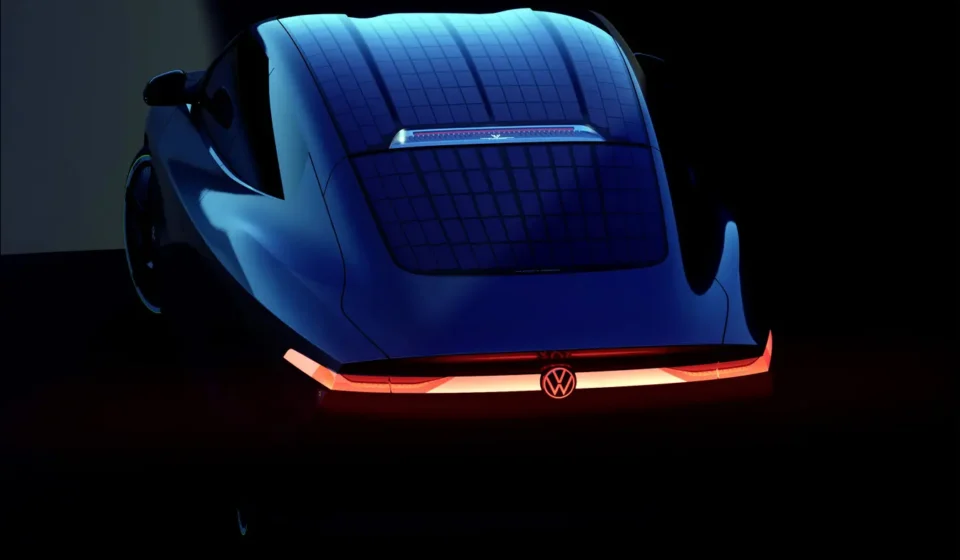
Typically, VW teases innovative ideas through unattainable concept cars, and Mission Efficiency follows suit as a sleek teardrop-shaped coupe. It directly challenges Tesla’s Cybercab with impressive real-world performance metrics.
Record-Breaking Efficiency Achievements
This concept has secured three official records:
- An ultra-low drag coefficient (Cd) of 0.158, minimizing air resistance.
- Ideal energy use of 6.48 kWh per 100 km at a steady 68 km/h.
- Real-world consumption of 6.89 kWh per 100 km (7.51 kWh/100 km including charging losses) over a demanding 1,278 km journey.
For context, Tesla’s two-seater Cybercab is estimated at around 9.0 kWh/100 km under WLTP standards. VW’s prototype crushes these figures without exotic tech.
Built with Everyday Components
What makes this exciting is its use of production-ready parts. The 99 kW motor and 55 kWh battery come straight from the upcoming ID. Polo, built on the MEB+ platform shared with models like the Polo and ID. Cross. No custom powertrains or hand-built engines here—just smart packaging.
The magic lies in the design:
- Aerodynamic teardrop body enveloping standard components.
- Patented wheel deflectors for better airflow.
- A 370 W solar roof to harvest extra energy.
- Custom Continental tires with rolling resistance 25% below the EU’s strict Class A limit.
These tweaks show how focused engineering can boost efficiency without reinventing the wheel.
How It Stacks Up Against Top Competitors
Concept Cars
Mercedes set a high bar with the Vision EQXX, achieving 8.7 kWh/100 km on a real trip from Sindelfingen to Cassis with a Cd of 0.17. It relied on silicon carbide electronics and aerospace materials. VW’s Mission Efficiency beats both metrics using off-the-shelf tech—a game-changer for scalability.
Production Vehicles
Among buyable EVs:
- Lucid Air Pure leads with a Cd of 0.197 and 5.0 miles per kWh (EPA), equating to about 12.4 kWh/100 km.
- Tesla Model 3 RWD has wowed testers with real-world figures around 13.5 kWh/100 km, surpassing EPA estimates.
Both are stellar, but neither touches VW’s concept numbers. This highlights the gap between lab prototypes and street-legal cars—and VW’s potential to close it.
Real-World Implications and Tips for EV Buyers
VW CEO Thomas Schäfer calls this ‘technology for the masses, not the elite.’ Unlike limited-run exotics, these innovations could trickle down to the next ID. Polo refresh, making ultra-efficient EVs affordable.
Actionable Insights for Maximizing EV Range:
- Prioritize Aerodynamics: Smooth shapes and low Cd reduce drag exponentially at highway speeds.
- Low Rolling Resistance Tires: Opt for premium eco-tires; they can save 10-20% energy.
- Solar Integration: Even small panels add free miles in sunny climates.
- Steady Speeds: Efficiency peaks around 60-70 km/h; avoid aggressive acceleration.
- Lightweight Design: Every kg saved extends range—VW proves it with simple materials.
As EV adoption grows, concepts like Mission Efficiency pave the way for longer ranges without massive batteries, lowering costs and environmental impact. Watch for production ripples from VW.