
Discover the Bestune Xiaomima 2027: China’s Affordable Mini EV Eyeing Vietnam
The electric vehicle market in Southeast Asia is buzzing, especially in Vietnam, where compact, budget-friendly options are gaining traction. Recently launched in China, the Bestune Xiaomima 2027 stands out with its eye-catching price tag of around 37,900 CNY—equivalent to about 146 million VND. Boasting a 222 km range on a single charge from a reliable 16.97 kWh CATL LFP battery, this pint-sized EV is designed for city dwellers. But the big question remains: will it make its way to Vietnamese roads soon?
While no official announcements have surfaced yet, the growing interest in mini electric cars and recent deals by local distributors signal promising developments. Let’s dive into what makes this model special and explore similar ultra-affordable EVs set to shake up Vietnam’s market.
Compact Design Tailored for Crowded Cities
Measuring exactly 3 meters in length (3,000 x 1,510 x 1,630 mm) with a 1,953 mm wheelbase, the Xiaomima 2027 is a master of maneuverability. Its boxy, cubic exterior maximizes interior space without unnecessary flair—no sleek aerodynamics here, just practical urban efficiency. The front and rear ends are nearly vertical, perfect for squeezing into tight parking spots in Hanoi or Ho Chi Minh City.
A key upgrade in the 2027 model? LED headlights that enhance nighttime visibility while keeping costs low. This design philosophy mirrors other Chinese mini EVs, prioritizing everyday usability over showy aesthetics.
Pro Tip: In Vietnam’s congested traffic, a turning radius under 5 meters (common in these minis) can save precious time navigating alleys and markets.
Smart, No-Frills Interior
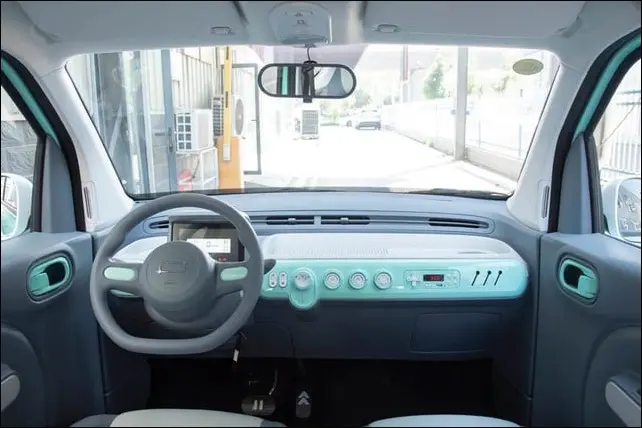
Step inside, and practicality reigns. Light brown tones create a cozy feel, paired with a simple two-spoke steering wheel and digital instrument cluster. Bestune innovates by mounting the gear selector on the steering column, freeing up the center console for storage—ideal for stashing phones, wallets, or snacks during commutes.
Forget massive touchscreens; essential functions use physical buttons and dials for quick, distraction-free access. This keeps manufacturing costs down and ensures reliability in humid tropical climates like Vietnam’s.
With only front seating optimized, every inch counts. The passenger side offers extra cubbies, making it a functional daily driver rather than a luxury cruiser.
Reliable Power: CATL LFP Battery and Urban Performance
Under the floor lies the star: a 16.97 kWh lithium iron phosphate (LFP) battery from CATL, a global leader known for safe, durable cells. It delivers up to 222 km under China’s CLTC test cycle—optimistic lab conditions including mild speeds and minimal loads.
In real-world Vietnamese use—think stop-go traffic, AC blasting in 35°C heat, hills in Da Nang—expect 160-190 km per charge. That’s ample for daily rounds: work (20 km), school drop-off (10 km), groceries (15 km), with buffer for unexpected trips.
A rear-mounted 41 hp (30 kW) electric motor with 90 Nm torque provides peppy acceleration for city merges, not highway thrills. Top speed suits urban limits, emphasizing efficiency over power.
LFP Advantages: Safer (less fire risk), longer life (3,000+ cycles), and cheaper than NMC batteries. Pair with home 220V charging for overnight top-ups.
Budget-Friendly Pricing in China
At 37,900 CNY (146 million VND pre-taxes/import), it’s a steal for a turnkey EV. This positions it against scooters for budget-conscious buyers seeking zero-fuel costs and low maintenance.
Note: Vietnam prices would rise with import duties, VAT, and logistics—likely 200-250 million VND, still competitive.
Current Bestune Xiaomima variants sell in Vietnam for 232-258 million VND, hinting at demand for updates like this 2027 refresh.
Vietnam’s Mini EV Boom: TMT Motors Leads the Charge
No confirmed launch for the Xiaomima 2027 yet, but TMT Motors’ partnership with SGMW (SAIC-GM-Wuling) promises a wave of cheap EVs:
Baojun E100: Pocket Rocket for Two
Ultra-compact at 2.49 meters, two-seater with 200 km range. 39 hp motor, home-charge in 5 hours via 220V outlet. Maneuvers like a scooter (3.7m turning circle), tops 100 km/h. Priced under 150 million VND—perfect scooter replacement.
Real-World Tip: Regenerative braking recaptures energy in traffic, extending range by 10-20%.
Baojun Yep 2023: Cubic Style with 303 km Punch
3-door cube with LED accents, dual 10.25-inch screens, leather seats. 67 hp rear motor, 8-hour home charge. Launching ~300 million VND.
Baojun Yep Plus: Family-Friendly Upgrade (401 km)
5-doors, 103 hp front motor, 41.9 kWh battery. 360° camera, auto AC, wireless charging. Under 500 million VND, 35-min fast charge option.
These models highlight Vietnam’s shift: easy home charging, low running costs (0.5-1 VND/km vs. 50+ for gas bikes), and incentives like green plates.
Why Mini EVs Suit Vietnam Perfectly
- Traffic Mastery: Park anywhere, weave through jams.
- Cost Savings: Battery lasts 10+ years; no oil changes.
- Eco-Friendly: Cut emissions in polluted cities.
- Charging Ease: Plug into household sockets—no need for stations yet sparse.
Actionable Advice:
- Calculate needs: 50 km/day? Any mini suffices.
- Test drive locals like VinFast Vento for comparison.
- Budget for home charger (3-5M VND install).
- Check subsidies—Vietnam eyes 1M EVs by 2030.
Final Thoughts: Get Ready for Affordable EV Revolution
The Bestune Xiaomima 2027 embodies accessible electrification: compact, capable, cheap. While its Vietnam debut awaits, TMT’s Baojun lineup fills the gap starting under 150 million VND. As infrastructure grows, these minis could eclipse scooters, transforming urban mobility.
Stay tuned—affordable green driving is closer than ever!