
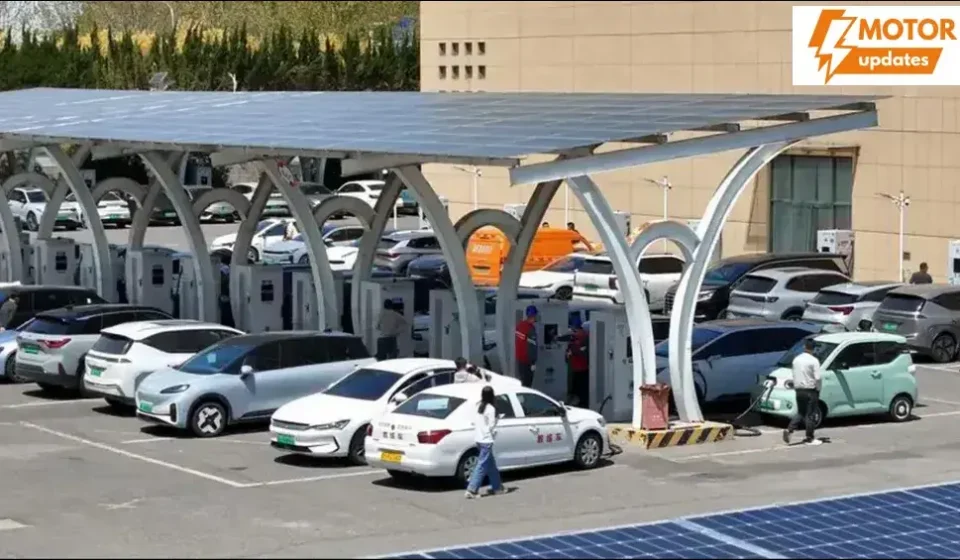

The electric vehicle (EV) revolution is gaining unprecedented speed worldwide, outpacing even the most optimistic forecasts. With falling battery prices, expanding charging networks, cutting-edge battery tech, and soaring fuel costs from geopolitical tensions, EVs are becoming the go-to choice for new car buyers everywhere.
Explosive Growth in Global EV Sales
Recent data reveals that EV sales worldwide reached around 21 million units in 2025, accounting for a solid 25% of all new vehicle purchases. Projections indicate this share will climb to 63% by mid-2026. Today, over 85 million EVs are cruising roads globally, a testament to the sector’s rapid expansion over the past six years.
One key appeal lies in the lower running costs compared to traditional gasoline cars. Home charging often costs 40% less than filling up with gas in places like Europe and the U.S., with global averages hitting 60% savings. This makes EVs a smart financial pick for daily commuters.
China’s Unrivaled Dominance
China remains the undisputed leader, manufacturing 71% of the world’s EVs—far ahead of Europe’s 17% and the U.S.’s 5%. Years of heavy investment in renewable energy, battery innovation, and massive-scale production have paid off. Battery prices there have dropped to just a quarter of their level from a decade ago and keep falling.
Take BYD’s premium models, for instance: they can deliver up to 700 km of range after just 10 minutes on a super-fast Flash Charger. Standard quick chargers add about 300 km in 20 minutes. China’s vast and growing charging infrastructure, combined with affordable electricity rates, makes owning an EV incredibly convenient and cost-effective.
Practical tip: If you’re in a market with good incentives, look for models with ultra-fast charging to minimize downtime—perfect for long trips or busy lifestyles.
Europe’s Strong Momentum vs. U.S. Slowdown
In the European Union, EV uptake has skyrocketed from a mere 1% of new registrations in 2018 to nearly one-third expected by early 2026. Supportive policies and robust infrastructure are fueling this boom.
Contrast that with the U.S., where EVs peaked at around 10% of new sales from 2023-2025 but are forecasted to dip below 6% by mid-2026. Challenges like inconsistent incentives and infrastructure gaps are holding back progress.
Emerging Markets Leapfrogging Ahead
Many developing nations are adopting EVs faster than the U.S. The International Energy Agency (IEA) highlights Nepal leading with 68% of new vehicle registrations projected to be electric in 2025, followed by Singapore (63%), Vietnam (41%), Thailand (23%), and Turkey (22%).
In Latin America, sales tripled between 2024 and 2025. Africa’s Ethiopia made headlines by banning internal combustion engine imports from 2024, causing EV numbers to quadruple to over 100,000 in two years.
Actionable advice for buyers in these regions: Prioritize vehicles with long-range batteries suited to local grids, and check government rebates to maximize savings.
Market Demand Fuels the Shift
Experts like Colin McKerracher from BloombergNEF note that this surge isn’t just policy-driven—consumer demand is taking the wheel. While government support remains vital for emissions goals, the transition is increasingly about economic sense over subsidies.
The IEA predicts acceleration as charging stations multiply and battery supply chains strengthen. For businesses and individuals, now’s the time to plan: Assess your driving needs, explore lease options for flexibility, and stay updated on local charging expansions to future-proof your mobility.